
Goals
Pick the one result that matters, name the two or three things the team does every shift to move it, and count them as they happen.
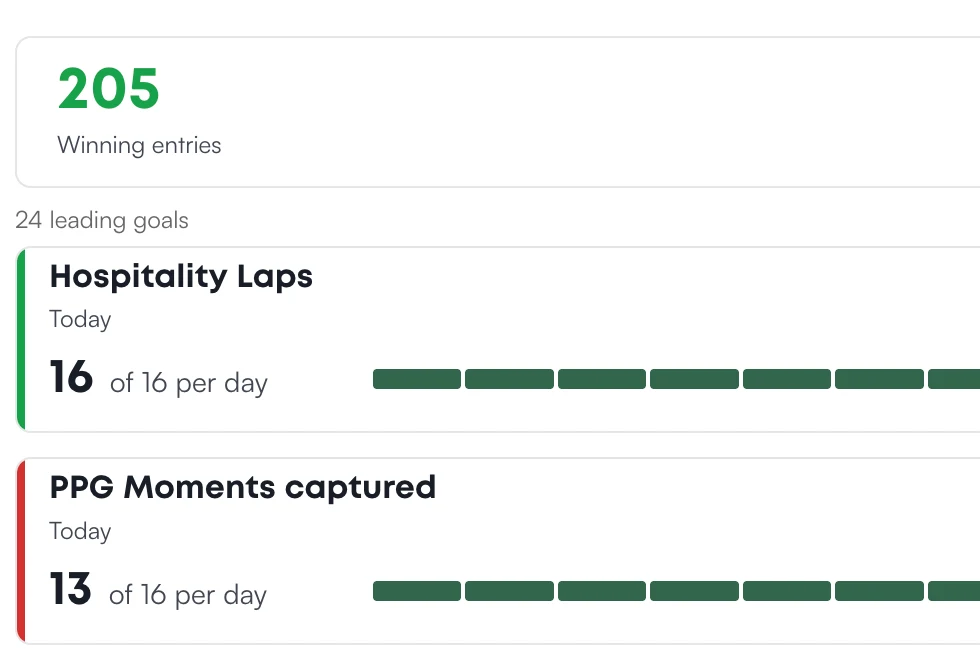
Every store has a number it is trying to move: the guest satisfaction score, drive-thru time, order accuracy. It arrives in a report weeks after the shifts that made it. In between, the team gets told to work harder, nobody can say which behaviors count toward it, and nobody knows on a Tuesday whether the month is being won.
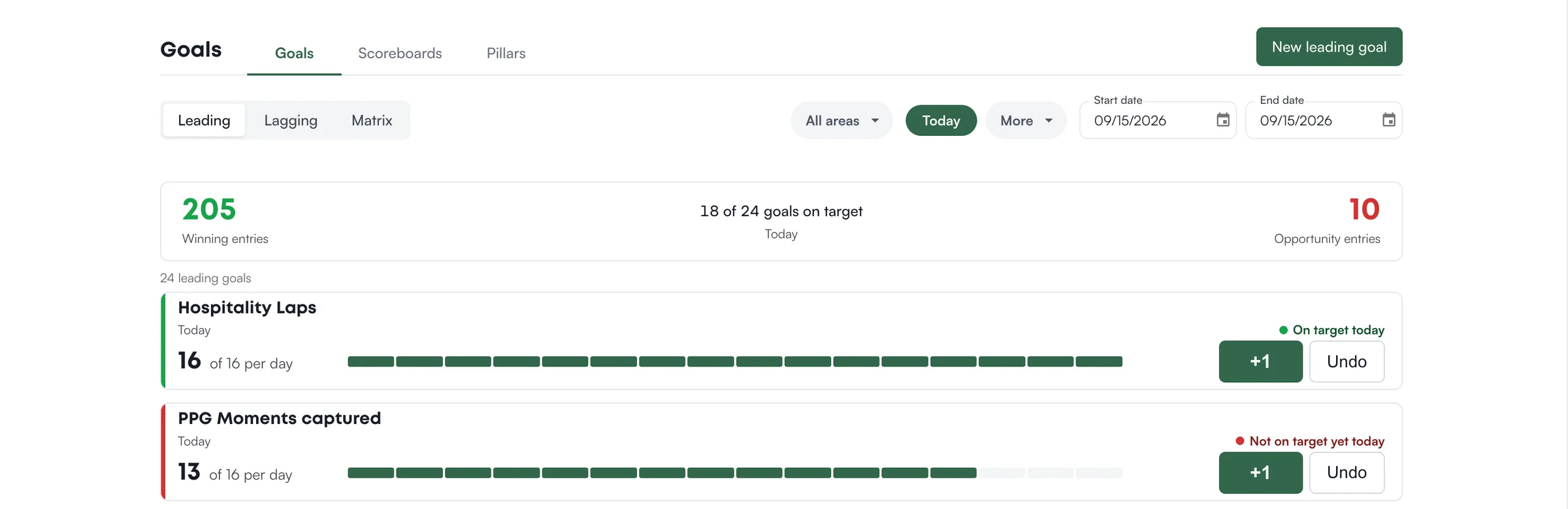
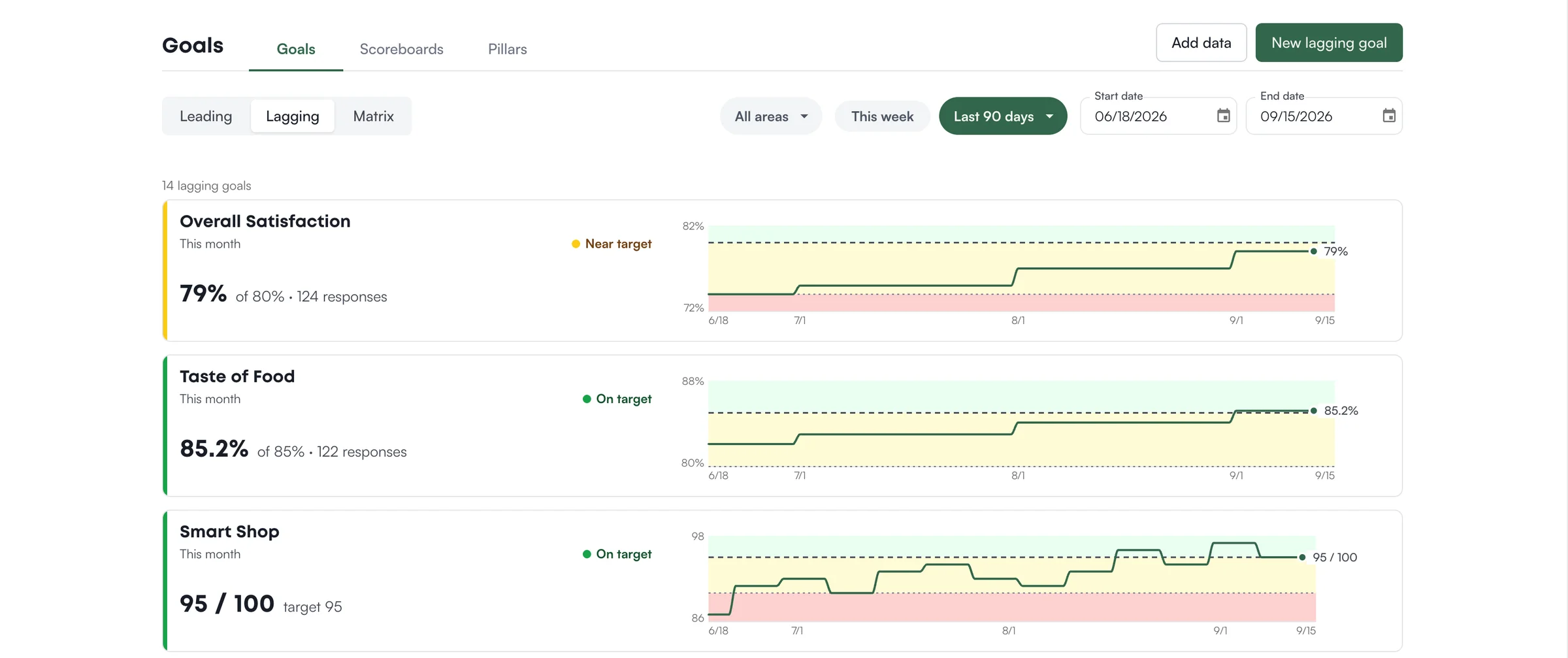
You name one result, the lagging measure, and the two or three things the team controls on every shift that move it, the leading measures. Leaders and team members tally the leading measures as they happen, plus one at a time, on a phone or on an iPad in the store. Results go in from the reports the store already receives. Everyone reads a scoreboard for their area, and leaders review the same board once a week.
How it works
One Result, Not Twenty
Name the number the store is playing for and set the target. The satisfaction score, drive-thru time, order accuracy. One per area, so the team can say it out loud without reading it off a list.
Two or Three Lead Measures
Pick the things the team decides to do on every shift: hospitality laps, table touches, orders staged before the car reaches the window. Few enough that everyone remembers them by the end of the first week.
Counted in the Moment
Plus one, on a phone on the floor or an iPad in the store, the moment it happens. The tally is live and attributed, not reconstructed from memory at close.
A Scoreboard Everyone Reads
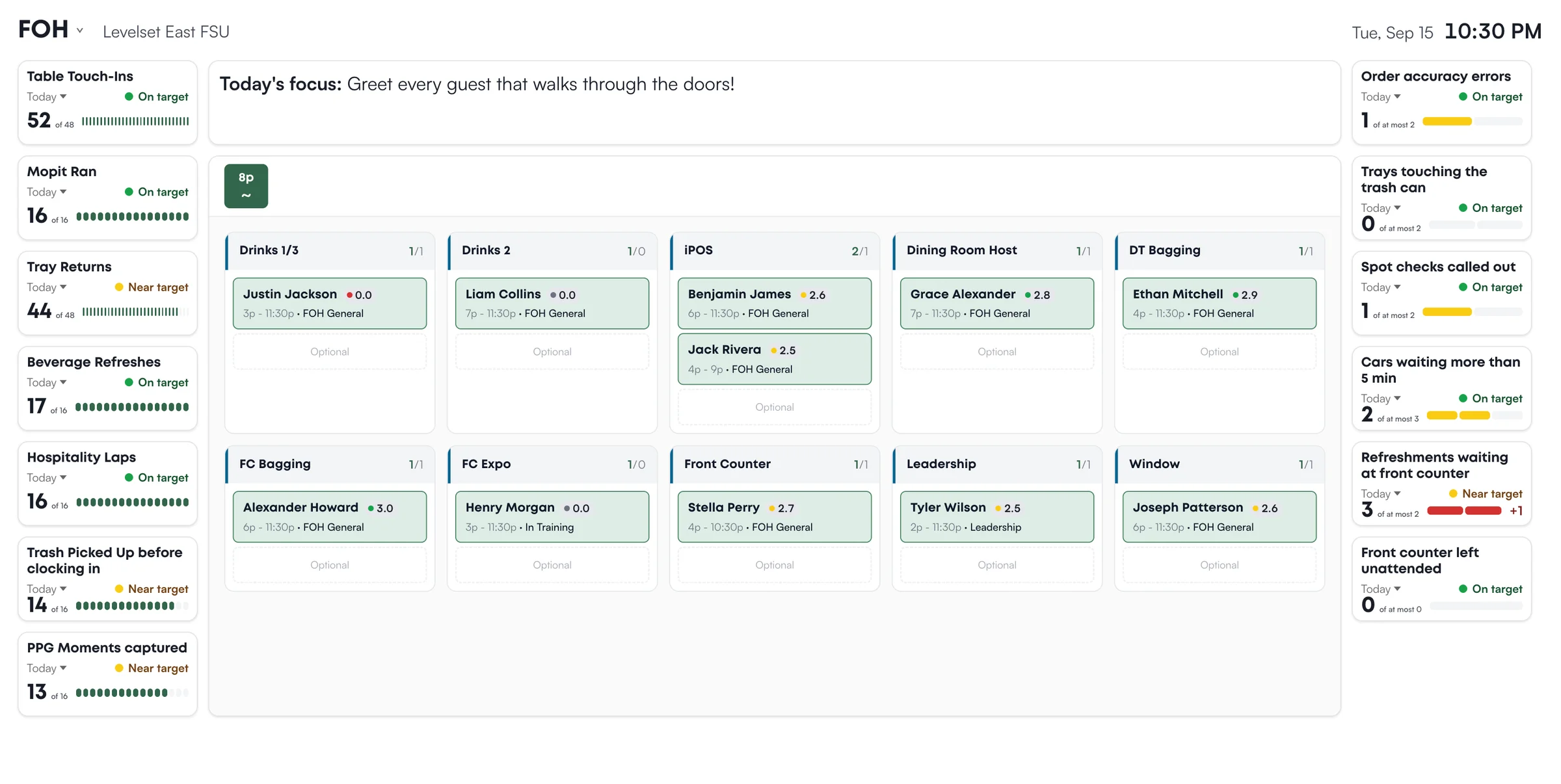
One board per area, front of house, back of house, leadership, showing whether the team is winning right now. A team member reads it in five seconds without asking a leader.
Leading and Lagging in One View
Leading shows what the team did. Lagging shows where the number went, entered from your own reports. The Matrix lines them up so you can see which behaviors are actually moving the result.
The Weekly Review
Leaders open the same board every week: what the team hit, what it missed, and what each leader commits to before the next one.
The premise is not ours. Naming one result, choosing the few behaviors that move it, keeping a scoreboard the team can read, and reviewing it every week is the discipline made popular by The 4 Disciplines of Execution. Levelset is not affiliated with FranklinCovey.
See it in action
Ready to try Goals?
Book a demo and see this workflow running on an operation like yours.
See Levelset in action. No commitment.